
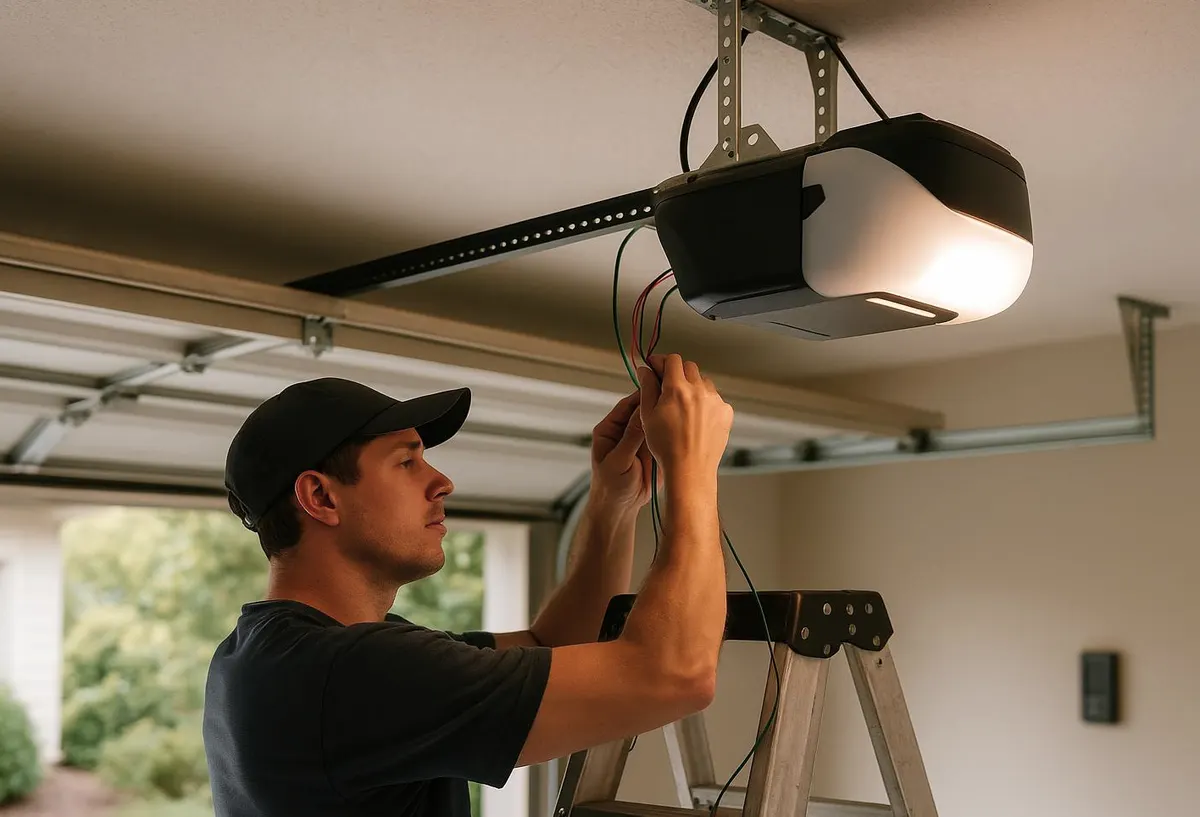
The mistake almost everyone makes first
Here's the assumption that starts the argument: "If the garage door breaks, that's the landlord's problem, period." It's tempting because that's how we think about furnaces, water heaters, and roofs — fixed systems you didn't touch, so if they fail, it's on the owner. But a garage door isn't like a water heater. It's the single most-used moving mechanical system in most homes, cycled open and closed multiple times a day by people, cars, remotes, and keypads. That constant use means wear and misuse can look identical from the outside, and that's exactly where the "whose fault is it" argument starts.
The honest answer is: it depends on what broke, how old the system was, and what the lease actually says. Here's how to sort it out before it turns into a fight.
Normal wear vs. tenant-caused damage
Garage door systems fail in two basic ways, and they're not treated the same.
- Normal wear: springs reaching the end of their cycle life, rollers wearing thin, weatherstripping cracking with age, an opener motor finally giving out after years of service. This is the stuff that happens to every door eventually, regardless of who's living there.
- Tenant-caused damage: backing a car into the door, forcing a door that's stuck instead of reporting it, letting the door slam because the opener's travel limits were never checked, drained remote batteries nobody replaced, or jamming something in the track.
Leases vary, but generally: landlords are responsible for keeping the system structurally sound and operational — springs, cables, tracks, panel integrity, and major mechanical failures tied to age. Tenants are generally responsible for damage caused by misuse and for reporting problems promptly instead of letting a small issue (a grinding noise, a door that drifts off-track) turn into a bigger, more expensive one.
The move-in inspection that prevents the argument later
Do this on day one, before anything has a chance to go wrong, and take dated photos as you go.
- Disconnect the opener and lift the door by hand. It should move smoothly and stay put when raised about halfway. If it's heavy, drops on its own, or binds, the springs or cables are already compromised — that's a pre-existing condition, not something you caused.
- Check the panels for dents, rust streaks, or water staining. A lot of homes in this area still have their original doors, and older steel panels show rust first at the bottom corners and along the seams.
- Look at the tracks and rollers. Note any rust on the hardware — road salt tracked in on tires over a winter or two is a common cause, and it's worth documenting if it's already there.
- Check the bottom weatherstripping. Gaps or cracking here matter more than people think; a bad seal lets in cold air, moisture, and pests, which becomes a bigger deal once humid summers or icy winters arrive.
- Test the opener's safety reversal. Place a block of wood flat on the ground where the door closes. The door should reverse on contact. If it doesn't, that's a safety issue worth flagging to the landlord in writing immediately, regardless of who's responsible for the fix.
- Test the remote, keypad, and wall button. Replace batteries if needed and note that you did — it's a cheap, easy thing to document so it's never a point of confusion later.
Why the season matters for this conversation
Winters here bring freeze-thaw cycles and salted roads, both of which accelerate wear on springs and hardware faster than people expect. A torsion spring that's already near the end of its life can snap on a cold morning when the metal is stiffest — that's normal wear catching up, not something a tenant did. On the other end, humid summers and nor'easters put stress on weatherstripping and can warp older wood or steel panels. If you're inspecting a unit heading into late fall, pay extra attention to the spring's coil gaps and any existing rust, since those are the parts most likely to fail once temperatures drop.
When to call Hatboro Garage Door
If the move-in inspection turns up something ambiguous — a door that's hard to lift, a spring that looks stretched, an opener that hums but doesn't engage — it's worth getting a neutral, written assessment before anyone argues about who pays. We offer garage door maintenance visits that document the current condition of springs, cables, rollers, and tracks, which landlords and tenants can both use to settle responsibility. If something's already failed, our spring replacement service gets it done safely — torsion springs are under serious tension and aren't a DIY repair — and we'll tell you plainly whether what we're looking at is age-related wear or something else.
If you're moving into a home in Hatboro, Horsham, Warminster, Willow Grove, Warrington, Abington, Jenkintown, or Ambler and want an honest inspection before winter sets in, call Hatboro Garage Door. We'll show up on time, walk you through exactly what we find, and give you something in writing you can actually use.